
Hula Balua Slot Features Explained
Hula Balua combines six distinct mechanics into a single game system. This page explains each one in detail - how it triggers, how it interacts with the others, and what it contributes to the game's win potential. Understanding these mechanics is the first step to playing Hula Balua effectively.
Contents
How the Hula Balua Engine Works
Hula Balua runs on ELK Studios' Sequence™ engine - a platform built specifically for cluster-pays games with cascading win sequences. The core principle is straightforward: wins are formed by groups of matching symbols occupying adjacent cells on the 6×6 grid, rather than by paylines. A winning cluster is cleared, new symbols fall from above, and the sequence continues until no new matches form.
What makes Hula Balua significantly more complex than a standard cluster game is what happens within that sequence. Three additional systems operate in parallel with the cascade: the big-symbol mechanic generates oversized symbol blocks; the merging mechanic fuses identical blocks when they become adjacent; and the global multiplier tracks and accumulates the combined impact of merges and redrops. These three systems interact continuously - a merge creates a larger symbol that is more likely to form part of the next redrop cluster, which itself adds to the multiplier, which applies to all wins at the end. The full slot review covers how this plays out across a session.
The result is a game where a single spin can cascade through six or seven iterations, with the multiplier growing at each step. Alternatively, a spin can produce a single small cluster with no cascade at all. This extreme range of outcomes is what earns Hula Balua its high-volatility classification, and it is precisely why understanding each mechanic individually matters before you play.

Big Symbols
Unlike standard slots where every symbol occupies a single grid cell, Hula Balua symbols can land as oversized blocks. The smallest big symbol is 2×2 (occupying four cells), and symbols can appear in larger configurations as well. The grid accommodates multiple big symbols simultaneously, and they stack and interact with each other during the redrop sequence.
The win calculation for big symbols follows cluster-pays logic but scales with size. A 2×2 symbol effectively contributes four cells to any adjacent matching cluster, making it significantly easier to form a large winning group than with single-cell symbols alone. A 3×3 block contributes nine cells - a single 3×3 symbol adjacent to three matching single-cell symbols forms a twelve-symbol cluster instantly.
| Symbol size | Cells covered | Cluster contribution | Merge potential |
|---|---|---|---|
| 1×1 (standard) | 1 | 1 cell per adjacent match | Does not merge |
| 2×2 | 4 | All 4 cells count in adjacent clusters | Merges with adjacent matching 2×2+ |
| 2×3 / 3×2 | 6 | All 6 cells count | Merges with adjacent matching blocks |
| 3×3 | 9 | All 9 cells count | Merges with adjacent matching blocks |
| Larger configurations | 9+ | All cells count; pays as one symbol type | Merges continue to add to multiplier |
Big symbols also affect grid dynamics. Because they occupy multiple cells, they leave larger gaps when they form part of a winning cluster and are cleared. These gaps create more space for new symbols to drop in, which increases the probability of further matches in the next redrop. The big-symbol mechanic therefore creates a positive feedback loop with the redrop mechanic - more cells cleared means more new symbols, means more opportunities for matches.
Merging Mechanics
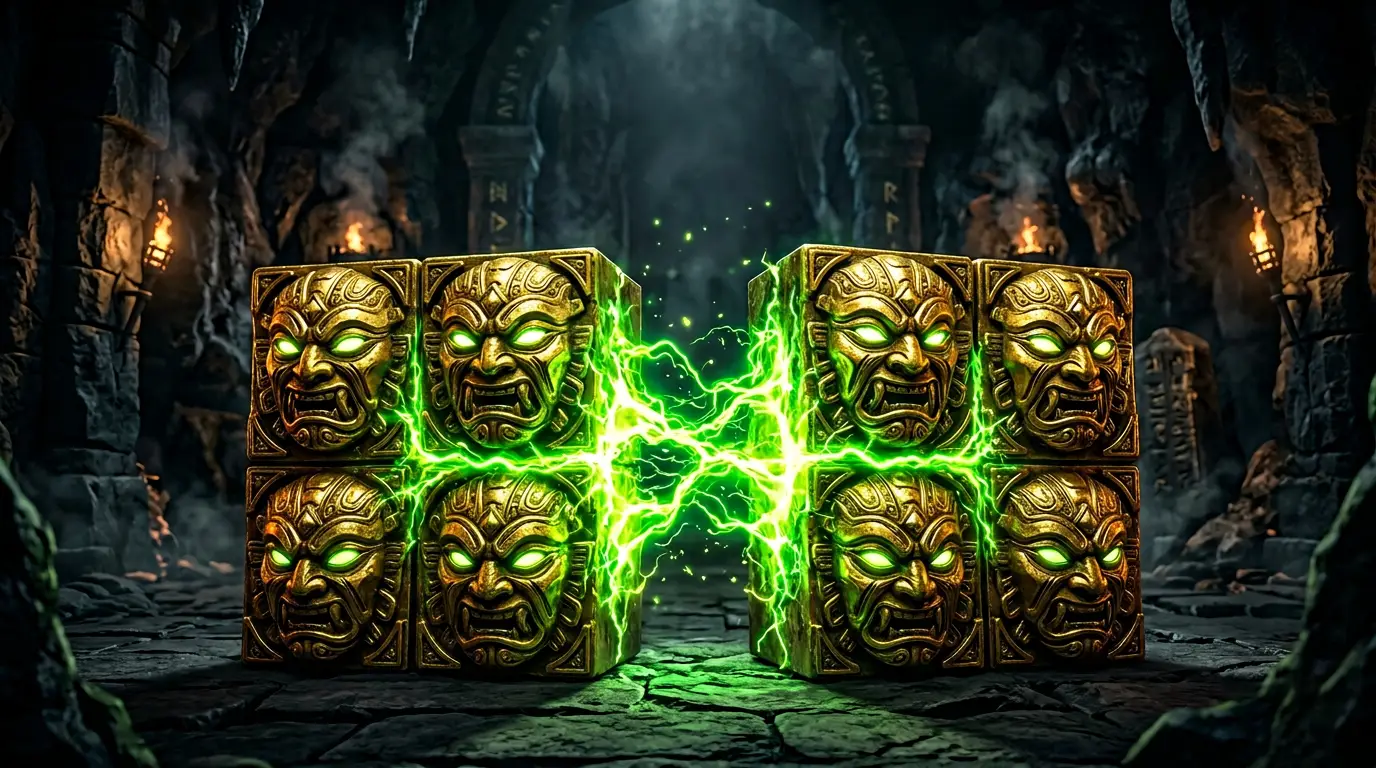
The merging mechanic is the feature that most distinguishes Hula Balua from other cluster-pays games. When two big symbols of the same type occupy adjacent cells - touching along any horizontal or vertical edge - they automatically fuse into a single larger block. This merge event occurs before the win calculation for that redrop step, meaning the merged symbol participates in the current cluster as a unified, larger entity.
Each merge event increments the global multiplier by 1. If three 2×2 blocks of the same premium symbol land adjacent to each other and chain-merge in two steps, the multiplier gains 2 before a single win is calculated. In a round where multiple merge chains occur across several redrops, the multiplier can reach double digits in the base game without any bonus trigger.
| Merge scenario | Result | Multiplier change |
|---|---|---|
| Two 2×2 blocks merge horizontally | One 2×4 block | +1× |
| Two 2×2 blocks merge vertically | One 4×2 block | +1× |
| Chain: 2×2 + 2×2 → 2×4, then another 2×2 joins | One 2×6 block | +2× total |
| Three-way merge in same redrop step | Larger unified block | +2× (two merge events) |
| New drops create fresh merge opportunity next redrop | Additional merge | +1× per additional merge |
The strategic implication is that grid states where large blocks of the same symbol type are positioned near each other are disproportionately valuable. A spin that starts with two 2×2 premium masks one cell apart has higher base-game win potential than a spin with the same symbols separated by five cells - not because of cluster size differences, but because a single redrop could bring them adjacent and trigger a merge chain.
Sticky Redrops
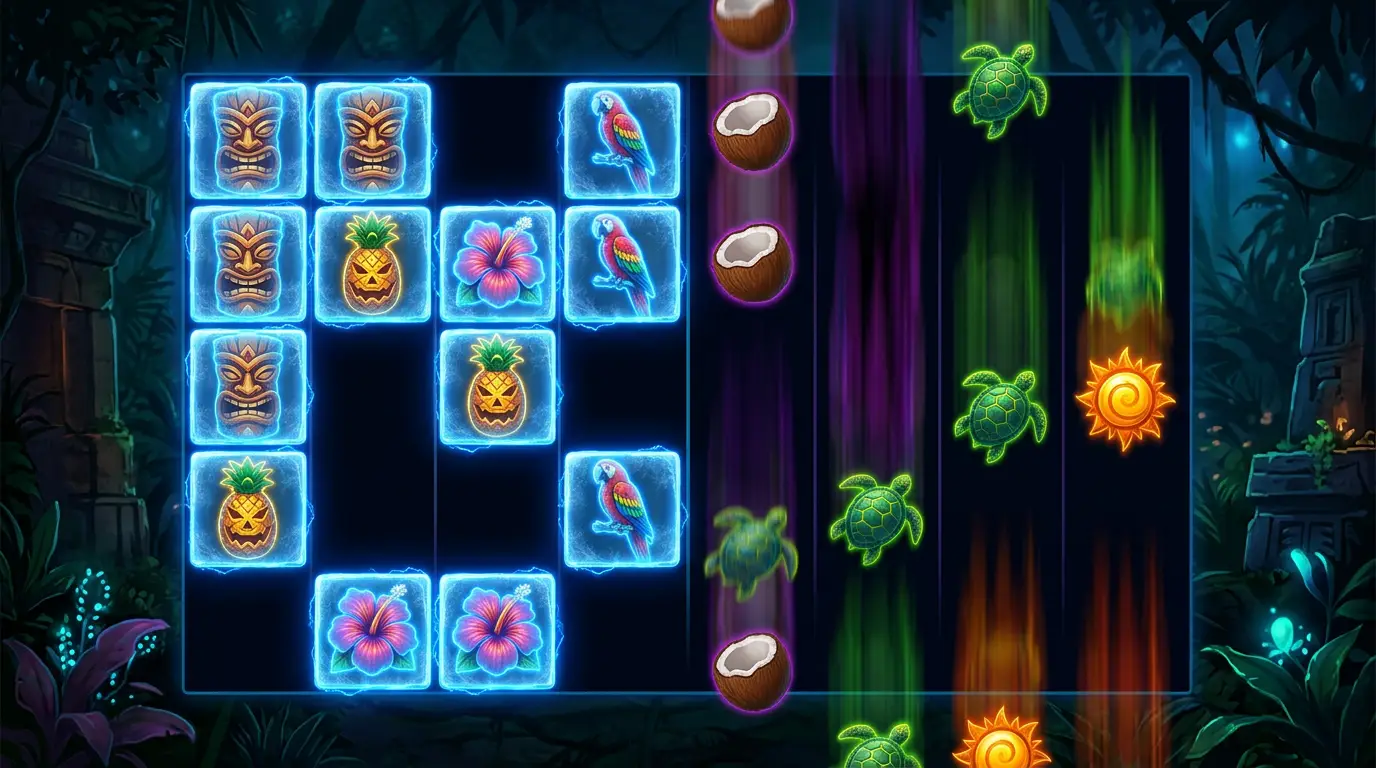
After a winning cluster pays, the contributing symbols are removed from the grid. Remaining symbols stay in place - they do not fall to fill the cleared cells. New symbols drop in from above to fill only the vacated positions. If these new symbols (combined with the sticky remaining symbols) form new winning clusters, the process repeats. This continues until a drop produces no new winning clusters.
Each redrop step that produces a winning cluster contributes to the global multiplier. The exact increment varies - the standard rule is +1 per contributing redrop - which means a five-redrop sequence adds at minimum 5× to the multiplier on top of any merge increments that occurred during those redrops.
| Redrop step | What happens | Multiplier state |
|---|---|---|
| Initial spin | Symbols land; winning clusters identified | 1× (base) |
| Redrop 1 | Winners cleared; stickies stay; new symbols drop | Increases with each merge + redrop |
| Redrop 2-N | Process repeats as long as new clusters form | Continues to accumulate |
| Final step | No new winning clusters - sequence ends | Final multiplier applied to total payout |
The sticky mechanic (as opposed to a full cascade where all non-winning symbols also fall) means that premium symbols that did not win in an earlier step can be positioned favourably for later redrops. A 3×3 premium symbol that was not part of any winning cluster in step 1 might become the cornerstone of a large cluster in step 3, when new drops fill the surrounding positions with matching symbols.
Elmo Redrops and Wild Symbols
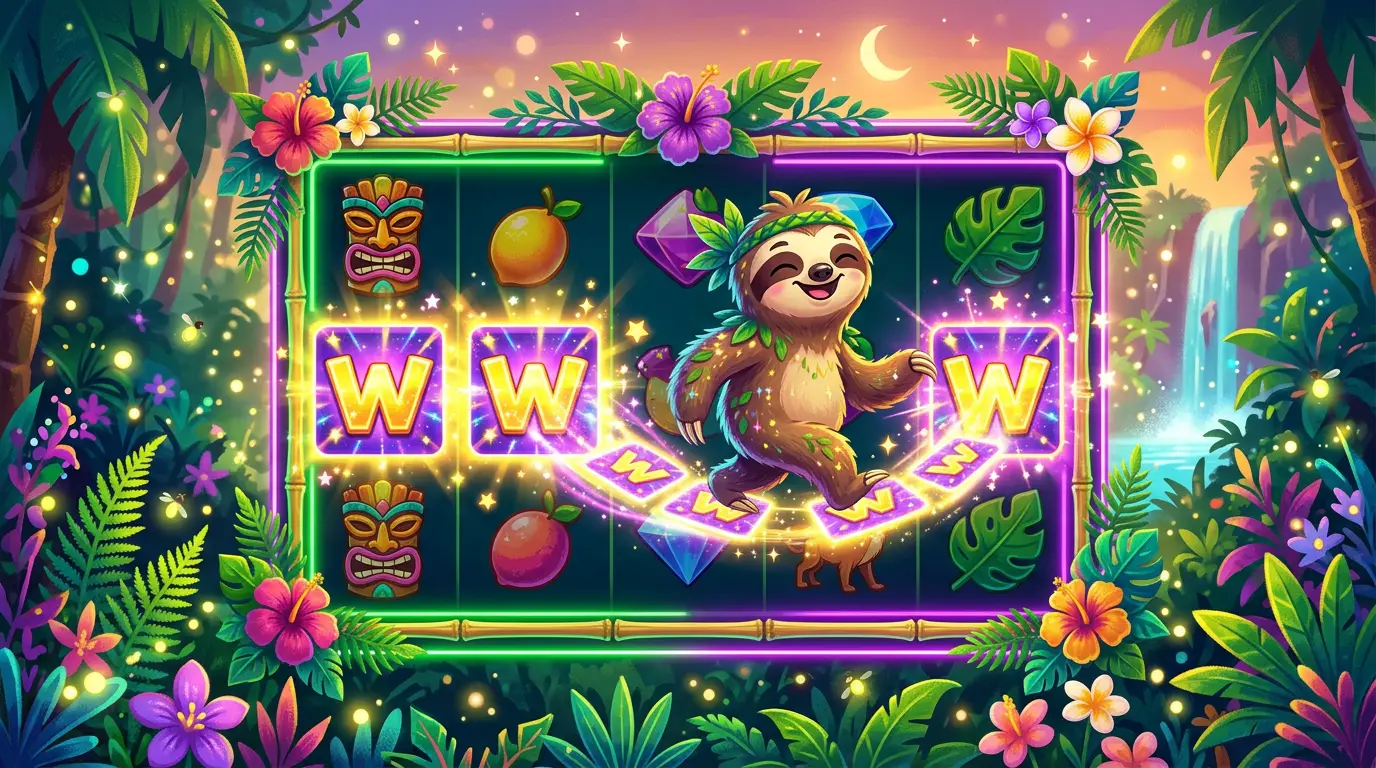
Elmo the Sloth is both the game's mascot and a gameplay mechanic. During the redrop sequence (including within Free Drops), Elmo can appear randomly and walk across the grid, converting symbols in his path to wild symbols. Wilds substitute for all regular symbols - they complete clusters they are adjacent to as if they were the matching symbol type.
Elmo's appearance is not guaranteed on any given redrop, but when he does appear, the impact is significant. A wild created by Elmo can bridge a gap between two clusters that would not otherwise have connected, enabling a merge between two big symbols that were separated by one cell. It can also complete a cluster from a small group of symbols that would not have paid on their own, triggering a further redrop that keeps the sequence alive.
The randomness of the Elmo Redrop mechanic is intentional. It introduces an element of unpredictability into the redrop sequence that cannot be anticipated - the grid state can shift dramatically at any point. This is the source of many of the most visually striking win sequences in the game, where a sequence that appeared to be ending is extended by Elmo's intervention and the multiplier continues to climb.
Wild symbols created by Elmo are not sticky - they do not persist into subsequent redrop steps unless they are part of a winning cluster that would normally have cleared non-participating symbols. The effective life of an Elmo wild is the current redrop step in which Elmo appears.
The Global Multiplier
The global multiplier is the unifying mechanic that connects big symbols, merges, and redrops into a coherent system. It starts at 1× at the beginning of each spin and increments each time a merge event occurs or a contributing redrop step happens. At the end of the complete sequence - when the final redrop produces no new wins - the multiplier is applied to the total accumulated wins for that round.
The critical point is that the multiplier is global and applied at the end, not per-step. Wins from redrop step 1 are not multiplied at step 1's multiplier value. They are held in a running total and the entire total is multiplied by the final multiplier value when the sequence concludes. This means the first cluster in a sequence is worth more - not less - in a round that eventually reaches a 10× multiplier, even if that first cluster paid when the multiplier was still at 1×.
There is no stated cap on the global multiplier within a single spin sequence. In theory, a round with ten merge events and five contributing redrops carries a 15× global multiplier minimum. In practice, the sequence length is constrained by the probability of continued matches, but the absence of a hard cap is meaningful - it is what makes the 25,000× maximum win mathematically reachable.
Free Drops Bonus
Free Drops is the primary bonus round in Hula Balua, triggered by landing three or more scatter symbols (the bonus symbol specific to this feature) in a single spin or at any point during a redrop sequence. Three scatters award the minimum free spins allocation; each additional scatter beyond three adds further drops and moves the round closer to a Super Bonus upgrade.
Inside Free Drops, all base-game mechanics remain active - big symbols, merges, sticky redrops, Elmo wilds, and the global multiplier all function identically. The global multiplier continues to accumulate across redrops within the Free Drops round and resets only at the start of each free spin, not at the start of the bonus round as a whole.
Scatters continue to land during Free Drops. Each one that appears adds additional free spins to the remaining total and contributes to the Super Bonus upgrade counter. The bonus can be extended significantly by scatter-heavy runs, and a run that starts as a minimum-trigger Free Drops can develop into a Super Bonus with enough additional scatters.
| Scatters in trigger | Initial free drops | Super Bonus progress |
|---|---|---|
| 3 scatters | Minimum award | Baseline - requires further scatters in bonus |
| 4 scatters | Bonus + additional drops | Closer to Super Bonus threshold |
| 5+ scatters | Extended award | May trigger Super Bonus immediately or very quickly |
| Additional scatters during bonus | Extends remaining drops | Each contributes to Super Bonus upgrade |
Super Bonus
Super Bonus is the top tier of the Hula Balua bonus structure. It activates when enough additional scatter symbols land during the Free Drops round to meet the upgrade threshold. When the upgrade triggers, the standard symbol set - which includes both premium and lower-value fruit symbols - is replaced entirely by the premium symbol set. Every symbol on the grid from that point forward is a high-value mask symbol.
The consequence of this symbol set change is substantial. In the base game and standard Free Drops, the expected value of any given cluster is averaged across all symbol types including low-value ones. In Super Bonus, every cluster pays at premium rates. Combined with the global multiplier that has been accumulating since the start of the current free spin sequence, the potential for a single Super Bonus spin to produce a large multiple of the stake is significantly higher than any base-game equivalent.
The Super Bonus is where the 25,000× maximum win is realistically accessible. Reaching it requires a specific combination of events: entering Super Bonus with accumulated multiplier growth, landing further scatters to extend the bonus, and sustaining a merge and redrop chain during Super Bonus spins. Each of these events is individually probable given the right conditions; all three occurring in the same session is rare, which is consistent with the stated maximum win being a mathematical cap rather than a regularly occurring outcome.
Scatter symbols continue to land during Super Bonus, and additional scatters extend the remaining free drops further. The upgrade path has a ceiling - once in Super Bonus, the symbol set does not change again - but the quantity of remaining drops can continue to grow throughout the round.
X-iter™ Bonus Buy
X-iter™ is ELK Studios' proprietary bonus purchase mechanic. Where permitted by local gambling regulation, X-iter™ allows players to pay a fixed multiple of their base stake to enter the game in a specific state - bypassing the natural trigger requirement for certain features. X-iter™ is unavailable in jurisdictions where bonus buy features are restricted or banned, including Great Britain.
Hula Balua offers five X-iter™ purchase options. The cost and benefit of each varies, and the RTP associated with each mode is specific to that mode - not the same as the base game RTP. Always consult the in-game help file to verify the RTP of each X-iter™ option before purchasing.
| X-iter™ mode | Approximate cost | What you get |
|---|---|---|
| Wild boost | Low multiple of stake | Next spin guaranteed to include additional wild symbols |
| Bonus chance boost | Moderate multiple | Increased scatter landing probability for the next spin |
| Free Drops entry | Higher multiple | Direct entry into Free Drops bonus round |
| Super Bonus direct | Highest multiple | Direct entry into Super Bonus (premium symbol set active) |
| Additional mode | Varies | Consult in-game help for current operator configuration |
X-iter™ is not a tool for improving the game's theoretical return. The RTP of bonus buy modes is typically similar to the base game - you are paying for certainty (guaranteed feature access) rather than mathematical advantage. The practical use case is for players who want to experience the bonus mechanics without waiting for a natural trigger, or for experienced players who prefer to allocate their session budget to bonus play rather than base-game spins.
The cost of a Super Bonus direct entry can represent 50-150 normal-stake spins depending on the exact multiple at your operator. For players with a limited session budget, this is a significant portion of their total allocation. Use X-iter™ with full awareness of its cost relative to your bankroll - the how to play guide covers session budget planning in detail.
Frequently Asked Questions
How does the merging mechanic work in Hula Balua?
When two big symbols of the same type are adjacent on the grid - touching horizontally or vertically - they automatically fuse into a single larger block. For example, two 2×2 blocks touching along their edges merge into a 2×4 or 4×2 symbol. Each merge increments the global multiplier by 1, and the merged symbol continues to participate in cluster wins.
What is the difference between Free Drops and Super Bonus?
Free Drops is the standard bonus round triggered by 3+ scatter symbols. Super Bonus is an upgraded version that triggers when additional scatters land during Free Drops. In Super Bonus mode, the standard symbol set (fruit symbols) is replaced by a premium set of high-value mask symbols only, which significantly increases the expected value of every cluster formed during the round.
How many X-iter™ modes are there in Hula Balua?
X-iter™ offers five purchase options, ranging from a wild boost on the next spin to direct entry into Free Drops or Super Bonus. Each mode costs a fixed multiple of your base stake. Availability depends on your jurisdiction - bonus buy features are restricted or unavailable in some regulated markets including the UK.
Can the global multiplier carry over between spins?
No. The global multiplier resets to 1× at the start of each new spin. It accumulates only within a single spin's redrop sequence - each merge and each contributing redrop within that sequence adds to it. At the end of the redrop chain (when no new matches form), the multiplier is applied to the total payout for that round and then resets.